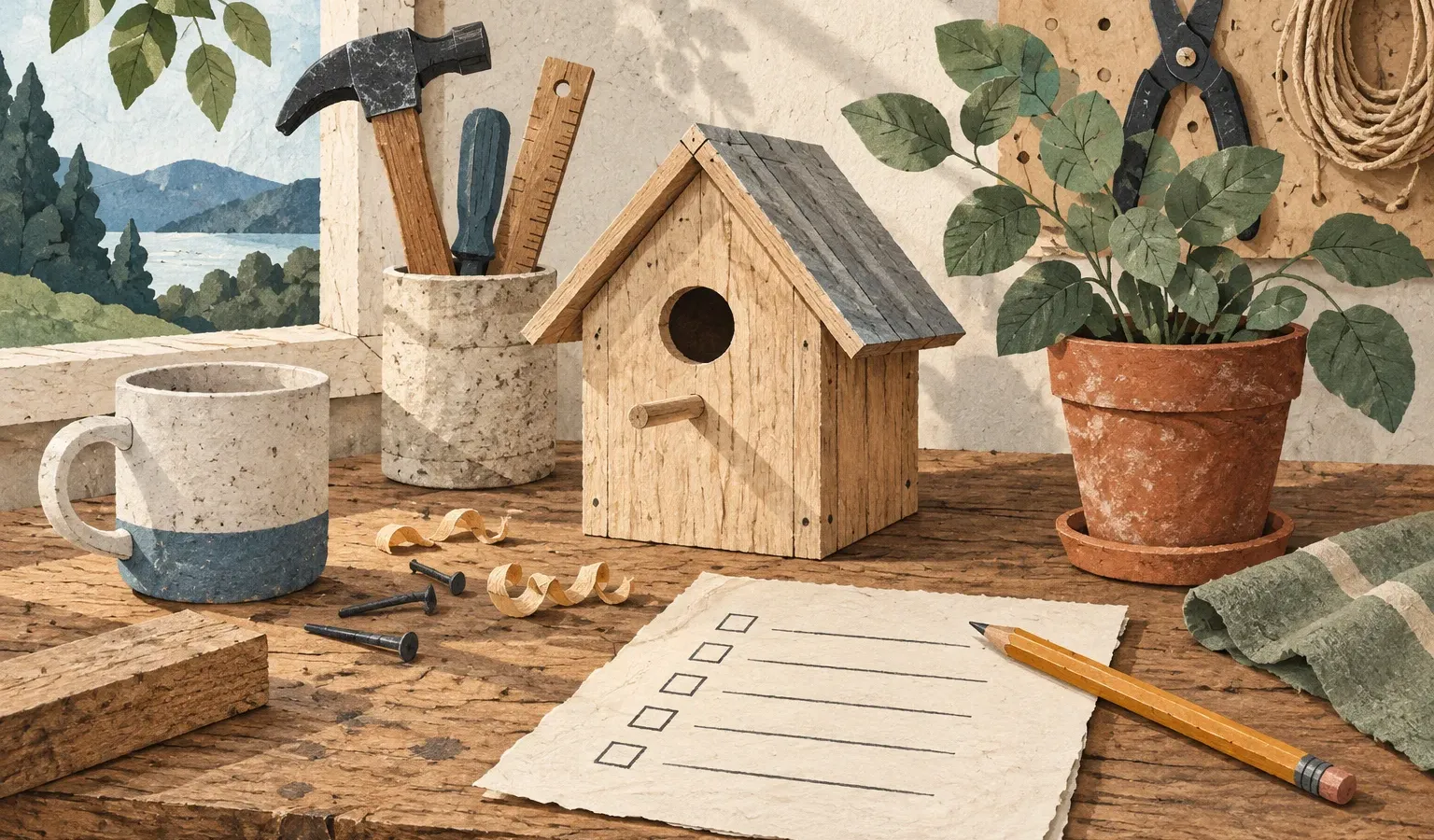
This is a sample project notebook. The checkboxes record an imagined weekend.
Choose something small enough to finish
The list began ambitiously: repaint the room, build a shelf, learn to draw trees. By breakfast it had become more useful. There were now three projects, each small enough to fit between an ordinary morning and an unhurried lunch.
- Mend the loose notebook cover.
- Sketch a birdhouse on scrap paper.
- Make a label for the seed box.
- Photograph the finished pieces.
These are Markdown task-list markers, not a saved task-management app. They show what checked and unchecked items look like inside an article.
Put the steps in order
- Clear one corner of the table.
- Gather only the materials for the first project.
- Keep a pencil within reach.
- Put scraps in a separate pile.
- Make the smallest useful version.
- Leave a note about what to try next.
A numbered list makes a sequence easier to follow. The nested bullets hold details that belong to one step without interrupting the order of the whole exercise.
Compare before beginning
| Project | Materials | Effort | Finish line |
|---|---|---|---|
| Notebook repair | Paper, tape | Small | The cover closes neatly |
| Birdhouse sketch | Pencil, scrap card | Small | One clear drawing |
| Seed-box label | Card, ink | Small | The contents are easy to find |
Stop at a useful ending
The notebook cover was slightly crooked when it dried. The birdhouse drawing had a roof that no actual carpenter would approve. Both had reached their finish lines.
Done for today is a useful phrase. It leaves room for another weekend without turning this one into a promise you cannot keep.