A fictional reading-room visit, written as sample content.
The chair beside the window
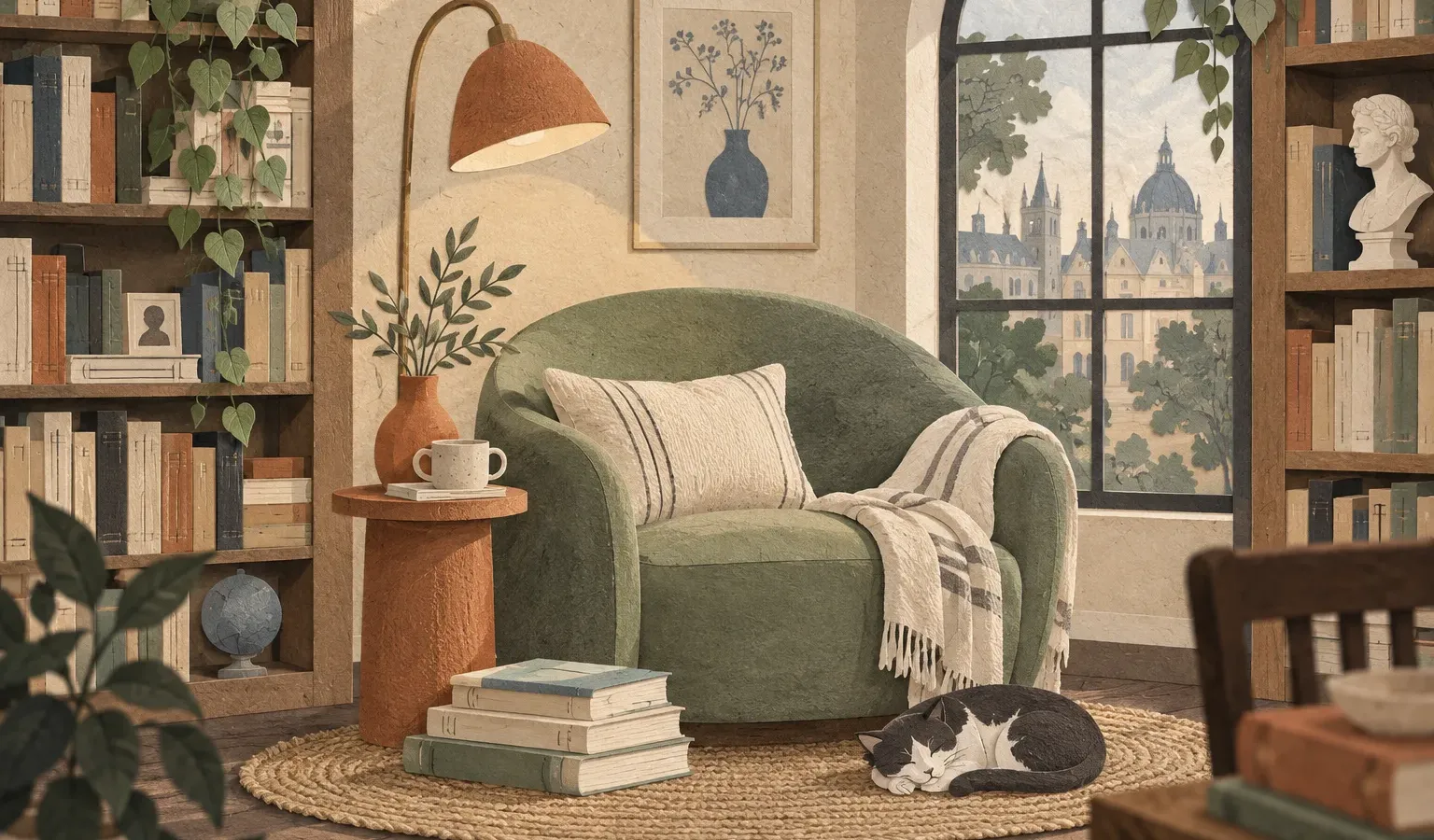
The best chair in the room was not the newest one. Its arms had been polished by years of sleeves, and one leg needed a folded piece of paper to stop it rocking. From that chair, you could see the whole shelf of blue books and a square of sky above the roof opposite.
Someone had left a pencil in the gutter of a book. The point was blunt. The note beside it said only, “Read this again.”
“What are you looking for?” asked the librarian.
“A sentence I can carry home.”
“Then you probably need to sit down.”
Three things to notice
- A good opening can begin with a small, ordinary object.
- A quoted conversation changes the pace of a paragraph.
- A useful note does not have to become an essay immediately.
The notebook on the table had three labels. They were not a system so much as a way of finding things later.
- Image
- Something the sentence lets you see: a blue shelf, a blunt pencil, a square of sky.
- Question
- Something the sentence leaves open, inviting you to keep reading.
- Echo
- A detail that returns later with a slightly different meaning.
What came home
By the time the light reached the carpet, the notebook held half a page. No grand conclusions, just a few observations and one phrase with a line beneath it: make room for the second reading.
The chair still rocked when the paper slipped. The sky had turned the color of the books. It was enough for an afternoon.