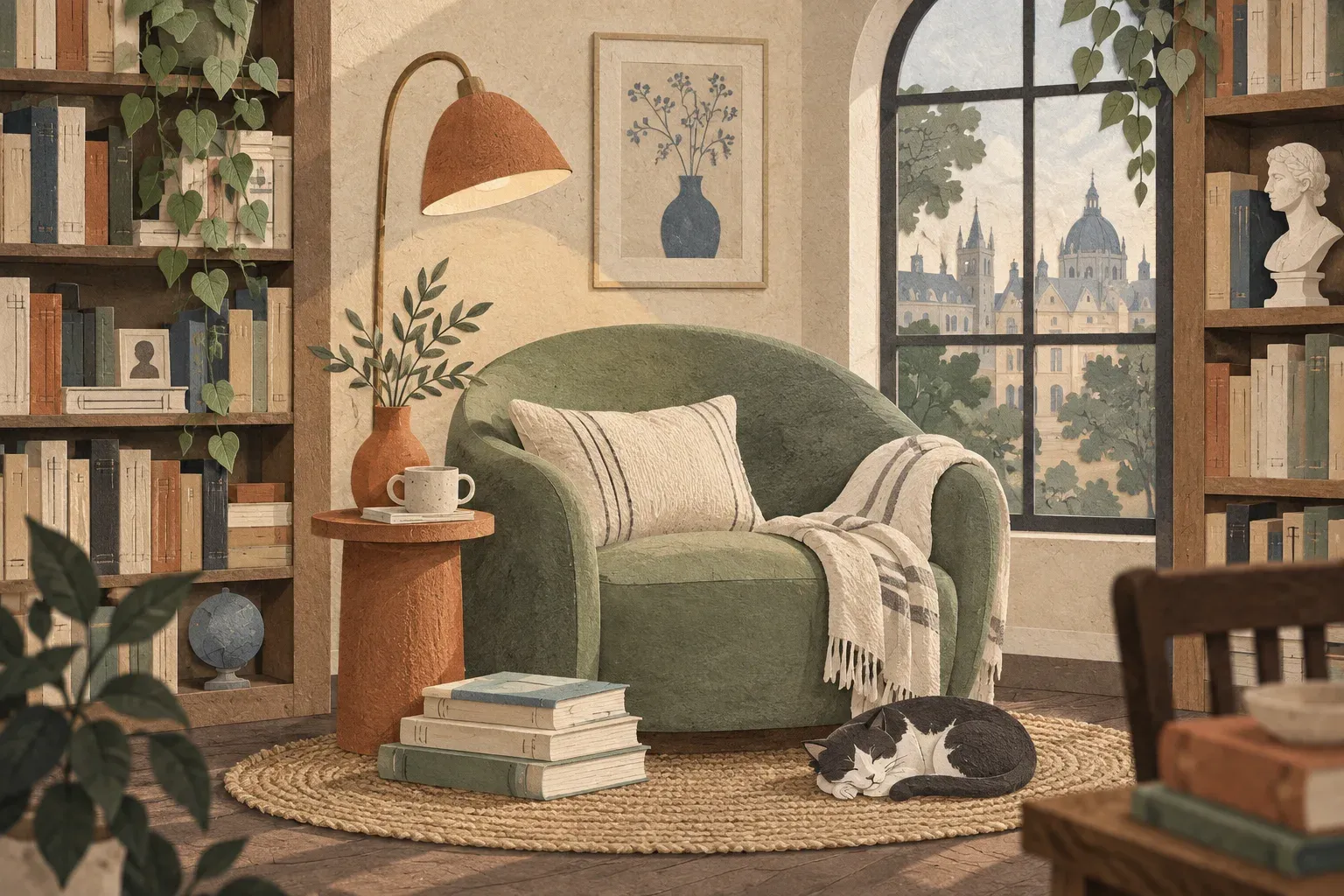
This is a sample article for the Paperline theme.
Some pages ask you to hurry. This one invites you to stay a while. Set a cup beside the keyboard, find a comfortable patch of light, and let a sentence take as long as it needs. A blog can be a notebook, a magazine, a collection of experiments, or simply a place to think out loud.
Paperline begins with that last possibility. The title has a little character. The body copy settles into a steady rhythm. Around it, a few useful details help you find your way without pulling you out of the story.
Words with room to breathe
This paragraph demonstrates the reading font at its everyday size. A longer line lets the eye travel, but a sensible reading width brings it back before it loses its place. The space between paragraphs is a quiet signal: one thought has ended, and another is about to begin.
Bold type gives a phrase weight. Italic type changes its voice. A link to the typography sample provides a path into the next idea. Small pieces of code, such as paperline, sit comfortably inside a sentence without pretending to be ordinary prose.
A smaller turn in the story
Subheadings divide a long article into places a reader can return to. They also appear in the table of contents. Scroll down, follow a section link, and notice how the article keeps its shape.
A detail worth keeping
A fourth-level heading works well for a specific detail inside a larger section. Use the levels in order so the page has a clear outline.
A voice in the margin
A blank page is not empty. It is a little room someone has left for an idea.
— An invented line from the Paperline notebook
A quotation creates a different pace. It can hold a short observation, a passage from an interview, or something you want the reader to pause over. The surrounding text still does the work of explaining why it belongs here.
More than one way to tell it
The collection is arranged as a small publication, with overlapping tags and a few broad categories.
- Writing explores sentences, notebooks, and the tools of a page.
- Design looks at color, space, patterns, and reading comfort.
- Journal holds fictional walks and illustrated postcards.
You can begin with a topic, follow a tag, or take a chance on the next article. Several stories share the typography and markdown tags so their archive pages have something to browse.
| If you want to see… | Open this sample |
|---|---|
| Code, footnotes, and inline formatting | A small guide to Markdown |
| Captions and full-width illustrations | Postcards from an imaginary coast |
| Lists and checkboxes | The weekend project list |
A small ending
A horizontal rule can mark a change of scene without adding another heading.
At the bottom of a story, the tags become another set of doors. The related articles are an invitation to keep reading. And if this is where you stop, that is all right too. A good page should be easy to leave and pleasant to return to.